Under the Palm Tree; Where you’re planted matters.
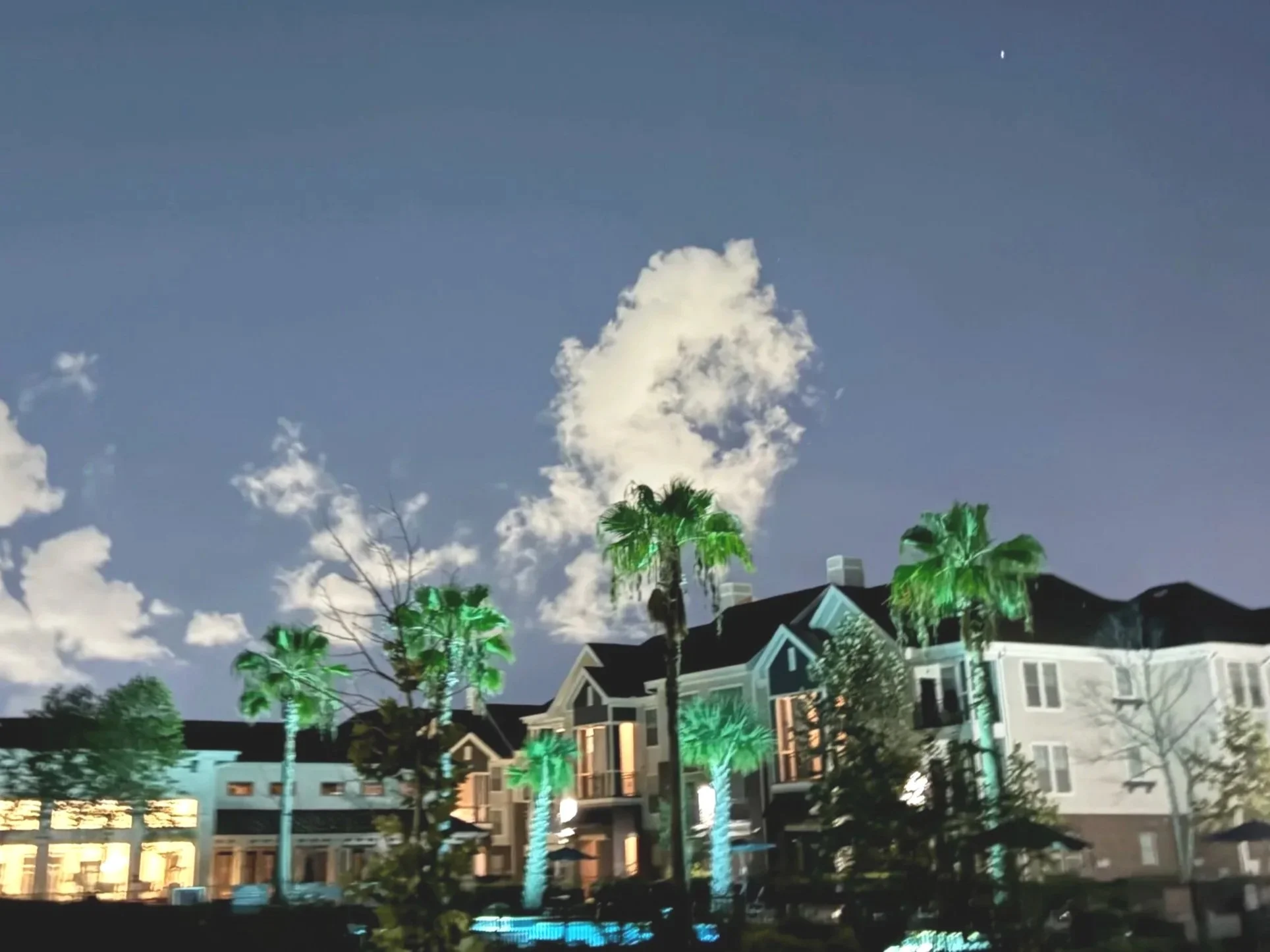
If you live in or visit Houston, you’ve probably had a conversation or two about the weather. Houston is hot, humid, green, and often described as “almost tropical.” Winters are usually mild, summers are long and heavy with moisture, and the city stays lush year-round.
Houston is also a beautiful city, though not always in a postcard way. Its beauty lives in its diversity—of people, cultures, languages, foods, and neighborhoods. It is warm not just in temperature but in spirit. Friendly. Expansive. Alive.
So it makes sense that palm trees line streets, highways, shopping centers, and parks. At a glance, they fit the vibe. They signal warmth, prosperity, ease, and global connectedness. But look closer—and longer—and the story becomes more complicated.
Why Are There Palm Trees in Houston?
Palm trees are not native to Houston. Their presence is the result of intentional aesthetic decisions, not ecological harmony.
The History Behind the Aesthetic
Palm trees began appearing in Houston in larger numbers during the mid-20th century, when:
Texas cities were rapidly expanding
Oil wealth was reshaping urban identity
Developers wanted Houston to feel modern, coastal, and globally relevant
Palms symbolized:
Leisure and prosperity
A Sun Belt identity
Warmth, growth, and success
They were planted to project an image, not because they belonged to the soil.
Houston’s proximity to the Gulf of Mexico and its generally mild winters made palms possible, even if not ideal. And so they stayed—despite freezes, replanting cycles, and ongoing maintenance.
The Environmental Reality
Houston’s soil is nutrient-rich and clay-heavy, excellent for native oaks, magnolias, and other deep-rooted trees. Palms, however, prefer sandy, fast-draining soil and stable warmth.
As a result:
Many palms survive but do not truly thrive
Hard freezes damage or kill them periodically
They require constant intervention and replacement
They don’t usually destroy the soil—but they don’t strengthen it either. Unlike native trees, palms contribute less to long-term soil health and resilience.
They stand tall, visually striking—yet vulnerable.
The Metaphor: When a Person Becomes the Palm
This is where the palm tree becomes more than landscaping.
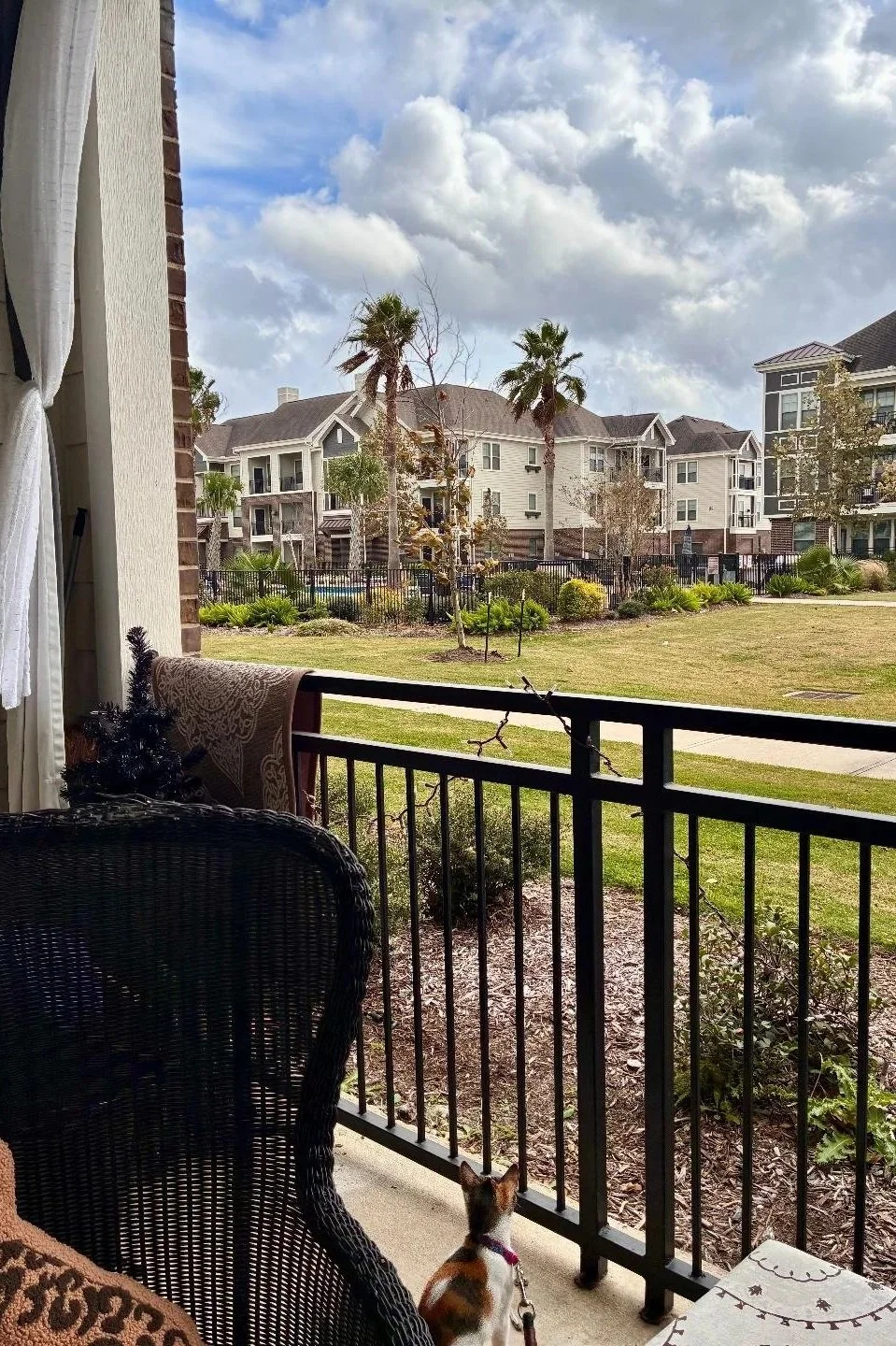
A palm tree in Houston is a powerful metaphor for a person who has planted themselves in an environment that looks good, functions well for others, and even feels welcoming—but is not truly nourishing for them.
Like the palm:
The person may survive
They may even be admired for standing out
But survival requires constant effort, adaptation, and recovery
Over time, the cost shows up as:
Burnout
Diminished joy
Feeling “off” without knowing why
Often, the struggle is blamed on the person—not the placement.
A Biblical Lens: Soil, Roots, and Placement
The Bible repeatedly uses trees and planting as metaphors for human life—not to glorify endurance in hostile conditions, but to emphasize placement and nourishment.
Psalm 1:1–3 (NIV)
“That person is like a tree planted by streams of water,
which yields its fruit in season
and whose leaf does not wither.”
Analysis:
The tree thrives not because it is strong, but because it is planted intentionally near what sustains it. Withering is framed as a placement issue, not a moral failure.
Jeremiah 17:7–8 (NIV)
“They will be like a tree planted by the water…
It does not fear when heat comes.”
Analysis:
The heat still comes. Difficulty is not avoided. But access to nourishment changes the outcome. Resilience flows from roots, not toughness.
Matthew 13:3–9 (The Parable of the Sower)
Jesus describes the same seed producing different outcomes based solely on soil conditions.
Analysis:
The seed is never blamed. The environment determines whether potential is realized or wasted.
When the Tree Has to Be Uprooted: Practical Tools for Transition
If you recognize yourself as the palm—surviving but not thriving—uprooting is not failure. It is wisdom.
1. Name the Mismatch (Positive Psychology: Cognitive Reframing)
Ask:
What does this environment reward?
What does it consistently drain from me?
Data replaces shame.
2. Conserve Energy (Conservation of Resources Theory)
Before leaving:
Stop over-explaining yourself
Reduce emotional labor that isn’t reciprocated
Preserve energy for transition
3. Test New Soil Before Fully Leaving (Possible Selves Theory)
Build skills aligned with where you’re going
Form relationships in the new space
Prototype the life
Healthy transitions overlap.
4. Expect Transplant Shock
Even good soil feels unfamiliar at first.
Set a 90-day no-judgment period
Don’t confuse discomfort with failure
5. Redefine Success
Success becomes:
Sustainability
Peace of effort
Alignment
Energy return
Not applause.
Under the Palm Tree: Memory, Rest, and Knowing Better
In African and Black diasporic traditions, the tree has never been just a tree. Across West African cultures, the palm or shade-giving tree has long served as a place of gathering, truth-telling, and decision-making. Elders sat there. Stories were passed there. Conflicts were resolved there. The tree was not decorative; it was functional—a place that offered shade, time, and honesty. That memory traveled with us. In Caribbean life and in Southern Black communities, sitting under the tree or under the palm signals a slowing down. It is where people rest their bodies and let their minds catch up. It’s where someone says, “come sit down a minute,” or “now you know better.” These are not casual moments. They are grounding ones—spaces where clarity arrives without spectacle. So when we speak of being under the palm tree, we are naming a space of reckoning rather than performance. A place where roots are examined, not just appearances. When palm trees struggle in Houston, the lesson isn’t about landscaping alone. It’s about what happens when something beautiful is placed where it is admired but not sustained. In our traditions, survival has never been the goal. Wisdom is. Longevity is. Fruit that lasts is. Under the palm tree, we learn that standing upright doesn’t always mean thriving, that rest is allowed, and that choosing better soil is not failure—it’s knowing better.
Closing Reflection
Palm trees in Houston are beautiful. They photograph well. They signal warmth and possibility. But they also tell a quiet truth: not everything that looks like it belongs actually does. The Bible does not praise trees for enduring barren soil. It promises fruit to those planted where nourishment flows. Uprooting is not instability. It is ecological intelligence. And sometimes, faith looks less like standing still—and more like choosing better soil.
References & Further Reading
Houston climate overview (NOAA): https://www.weather.gov/hgx/climate_iah
Texas A&M AgriLife Extension – Palms for Texas Landscapes: https://aggie-horticulture.tamu.edu/ornamentals/palms/
University of Florida IFAS – Palm Cold Damage and Freeze Recovery: https://edis.ifas.ufl.edu/publication/MG318
Psalm 1 (NIV): https://www.biblegateway.com/passage/?search=Psalm+1&version=NIV
Jeremiah 17:7–8 (NIV): https://www.biblegateway.com/passage/?search=Jeremiah+17%3A7-8&version=NIV
Matthew 13:3–9 (NIV): https://www.biblegateway.com/passage/?search=Matthew+13%3A3-9&version=NIV