PTO and corporate holiday calendars: Why I celebrate Juneteenth
Why I Celebrate Juneteenth
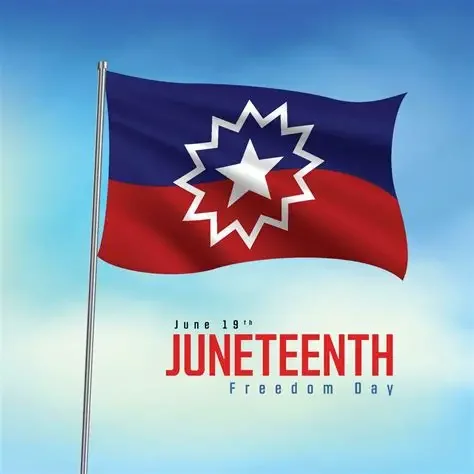
Juneteenth commemorates June 19, 1865, the day the last enslaved people in Texas were informed of their freedom, more than two years after the Emancipation Proclamation was issued. The name itself is a portmanteau, combining “June” and “nineteenth” into a single word that has become synonymous with remembrance, resilience, and celebration (National Museum of African American History and Culture, 2025).
Although Juneteenth was only recently recognized as a federal holiday in 2021 when President Joe Biden signed the Juneteenth National Independence Day Act into law, generations of families and communities have preserved its significance through oral traditions, storytelling, educational programs, faith gatherings, celebrations, and cultural customs (U.S. Congress, 2021). Long before it received national recognition, many Americans were already honoring the history, lessons, and legacy of the day.
For some, Juneteenth is more than just another day off work. It is a time to reflect on the past, appreciate the progress that has been made, and consider how we can continue building stronger communities and a better future for generations to come.
Growing up, Juneteenth was always a special time in my family. My maternal grandmother, Lennett, made sure of that. She spent her formative years in Smackover, Arkansas, Oakland, California, and later East Texas. Her father was a minister and sharecropper, and her mother was a homemaker. Family stories, faith, resilience, and community were woven into the fabric of their lives and passed down through the generations.
My grandmother and her family were part of the First Great Migration to California, driven by the search for better economic opportunities and an escape from the oppressive conditions of Jim Crow laws. The Great Migration saw approximately six million African Americans leave the rural South between 1910 and 1970 in search of greater economic opportunities, educational access, and civil rights protections (Library of Congress; National Archives).
Before marrying and raising children, they eventually settled back in East Texas, bringing with them the experiences, lessons, and perspectives gained along the way.
One of my favorite family stories is that my great-grandmother placed a gold necklace on me the day I was born. Moments like that remind me that history is not something distant. It is something we carry with us.
Each year, my grandmother took us to parades, festivals, community programs, and celebrations. As a child in the nineteen eighties, I remember learning the Negro National Anthem “Lift Every Voice and Sing”, listening to stories and poetry, making crafts, and participating in activities designed to teach us about our history and culture. Culture can be understood as the shared values, customs, traditions, beliefs, arts, and social behaviors passed from one generation to the next (UNESCO). Juneteenth was not just a holiday on the calendar. It was a time to gather, learn, connect, and honor the journey that brought us to where we are today.
This year, I spent part of the weekend with fellow small business owners, making connections and fellowshiping with other community-based businesses that seek to create, elevate, shape, empower, grow, and expand our communities and the world around us. That experience felt especially meaningful and connected to the spirit of Juneteenth. It was people investing in one another, building opportunities, and creating something better for future generations. Small businesses and entrepreneurs are often described as the backbone of the American economy because they account for nearly half of private-sector employment and create a significant share of new jobs in the United States (U.S. Small Business Administration).
This weekend, I also celebrated by playing golf at the historic Hermann Park Golf Course in Houston. Opened in 1922, it holds a unique place in history as one of the first public golf courses in the United States to integrate. Standing on those fairways was a reminder that progress is often built one step, one decision, and one generation at a time.
As I have gotten older, Juneteenth has come to represent something even broader. It is an opportunity to reflect on a chapter of American history that was difficult, but important. I believe one person’s culture is not more important or significant than another’s. Every culture, community, and experience has value and contributes to our collective story.
The hardest truths often offer the greatest lessons. Juneteenth reminds me that understanding our history, both the triumphs and the challenges, helps us build greater empathy, appreciation, and connection with one another. Following Reconstruction, many Southern states enacted Jim Crow laws to preserve racial segregation and maintain social, political, and economic systems that limited the rights and opportunities of Black Americans after slavery ended (National Park Service).
While I value the lessons of the past, I do not live there. I believe in looking forward, always moving ahead, always learning, always developing personally, and always striving to be better than I was yesterday. To me, honoring history is not about remaining anchored to it. It is about carrying its wisdom with us as we continue to grow, build, and create a better future.
For me, Juneteenth is about family, community, resilience, learning, progress, and hope. It is a reminder that we grow not by avoiding difficult conversations, but by understanding them. It is also a reminder that we are our ancestors’ wildest dreams and that each generation has an opportunity, and a responsibility, to leave the world a little better than we found it.
What does celebrating Juneteenth mean to you?
Sources & Further Reading
National Museum of African American History and Culture. “The Historical Legacy of Juneteenth.”
Juneteenth National Independence Day Act, Public Law 117-17 (2021).
Library of Congress. “African American Odyssey: The Great Migration.”
National Archives. “The Great Migration.”
UNESCO. “What is Culture?”
U.S. Small Business Administration. Office of Advocacy, Small Business Economic Profile.
National Park Service. “Jim Crow Laws and Racial Segregation in the United States.”
#Juneteenth #CommunityLeadership #SmallBusiness #PersonalGrowth #LifelongLearning #AmericanHistory #Leadership